
The new year brought in some much needed improvements to the Pensacola Police Department. In the January 2, 1949 edition of the Pensacola News Journal, Chief Crosby Hal discussed some the changes. As we all know, change is necessary, and overall, changes bring good things. But the task of learning the news ways was not always easy.
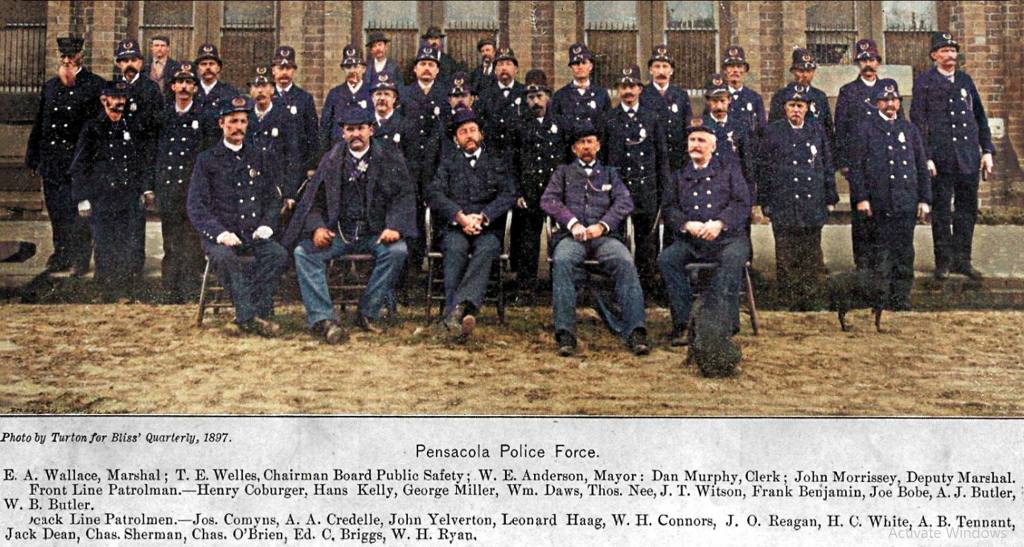
In 1884, the police department was allocated money to purchase new uniforms. This greatly increased the public’s perception of professionalism and improved morale. But the uniforms had always been a mismatch of pieces. Some officers had one kind of shirt, while others had another. Some badges were standard issue, while other officers wore miscellaneous badge, or no badge at all. Finally, in 1949, all officers were issued uniforms, equipment and badges that were, well, uniformly. Further each badge had the officer’s number on it.

Another improvement was the addition of two-way communication. Throughout the 1800s and for the first few years of the 1900s, the desk sergeant would ring the city bell if he needed an officer to respond to something. Of course, this form of communication was not very efficient. It became somewhat better when call boxes were installed, so the officer could call in when the bell rang.

The police department acquired its first automobile in 1913. Twenty years later, one-way radios were installed in cruisers. The base station was located in the desk sergeant’s office, so, when an officer was needed, the desk sergeant could dispatch him. It was a great improvement in communication, but it had one problem – no one knew if the officer heard the call. The desk sergeant would put the same call out three times in hopes that the officer would catch at least one of them.

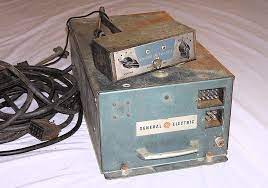
Finally, in 1948, eight police cars were equipped with what was known as three way radios. Not only could officers hear and communicate with the desk sergeant, but they could also talk to one another and with the fire department, who also had radios. Officer affectionately nicknamed the huge units knee-knockers. The Desk Sergeant’s office was modernized also. Instead of the sergeant being the officer that handled issues at the police station, he was now the supervisor over the new clerk’s office where reports were kept, and he supervised the radio operators who manned the control board.
Also, as the new and developing section called the Identification Section (the precursor to the Crime Scene Unit), Officers Pfeiffer and Little now had a dark room, and equipment for developing and printing film, and it was temperature controlled! Now, all suspects could be fingerprinted, photographed and identified!
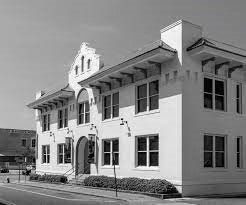
Other improvements were a new roof on the station and another one on the jail, cracks were plastered over, and repairs to the heating system. The outside also got a new coat of white paint.
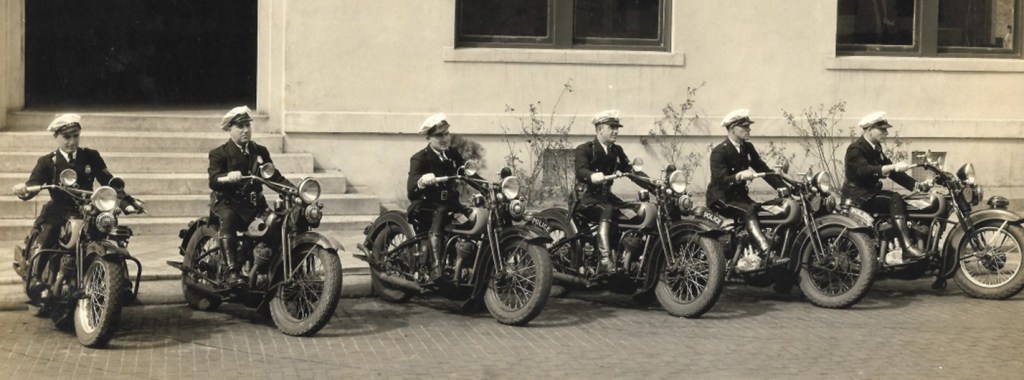
The size of the department also increased. The detective division from five to eight men, the one three-wheeler in the Traffic Section was increased to two, and the motorcycle squad grew from six to eight men.
The chief also announced plans for 1949 to include “beautifying” the courtroom, spending more time training new officers, improve the PR section, and a new system of traffic lights. Chief Hall said his goal was to be recognized as one of the finest departments in the South.
Interesting…
Mike
 The Pensacola Police Historic Society
Leave a comment