By Mike Simmons
A police officer in 1882 did not require much education, and the pay was not great. However, the position has always carried with it a certain amount of prestige and authority over others. So, even though the War Between the States was over, many state and local governments were not willing to put persons of color in charge of others. Many cities, counties or states had no black police officers until the 1950s or 1960s. There were exceptions, of course. One of the most feared and respected law officers was Deputy US Marshal Bass Reeves, 1838-1910. In addition, Daniel Hale Williams was a famous physician, and John Sweat Rock was a successful attorney. However, as has been noted previously, Pensacola was not a typical southern town. Racial problems in Pensacola were not as significant as it was in many towns – north or south.
This is not to say that Pensacola was without racial pressures and problems. Following the war between the states, southern sympathizers successfully pushed to have “Black Codes” established to keep newly freed African Americans, called “Freedmen,” from becoming truly free. In 1865, Congress enacted the Bureau of Refugees, Freedmen and Abandoned Lands, known as the Freedmen’s Bureau, to assist blacks and destitute whites to get on their feet. The Bureau ushered in an unprecedented move on the part of the city fathers. Two African-American men were hired as Pensacola Police Officers. Though their names are not known, integration was established in Pensacola.
The presence of the Bureau and of the military kept tensions down, but not out. According to Ralph Peek in his book Lawlessness and the Restoration of Order in Florida: 1868-1871, in September 1868, an unknown black Pensacola police officer was shot three times and would have been killed had another person not stepped in and saved him. However, many of the white people in the town were not concerned for the officer’s well-being. A few days later, another unknown black Pensacola police officer, seeing the trouble brewing, refused to arrest a white lawbreaker. He carried through with the arrest only after his white supervisor ordered him to.
In the post-Civil War South, it was uncommon to employ a person of color as a police officer. Of course, Pensacola was an uncommon post-Civil War town. Many of the racial problems that proved prevalent in other southern towns didn’t seem to be much of an issue here. Maybe this was due to the fact that the town contained many seafaring people from across the globe, or maybe it was because of the presence of so many from the federal government (through the US Navy), or maybe it was due to the many opportunities for reconstruction jobs in the area’s pine forests. Whatever the reason, Pensacola did not suffer as many of the racial tensions that many towns experienced. The first identified Pensacola Police Officer of Color is mentioned in a column in the August 1, 1882, edition of the Pensacola Commercial. It reads “Policeman Cook (colored), well and favorably known hereabouts has been restored to his position on the police force of the city, much to the delectation of his numerous friends, who may be counted by scores in all races as well as shades of political bias. He will be in charge of the Street Brigade, and under his direction, it is said more and better work can be accomplished than under any member of the force. It is hoped that he will give any genius he may have in this direction ‘full play,’ as our thoroughfares are certainly much in need of it.” Three days later, the following appeared in The Pensacola Commercial newspaper: “On yesterday morning, Thos. Glennon was fined $10 in the police court for shooting at police officer Smith Campbell, colored. Mr. Glennon was afterwards arrested on a peace warrant sworn out by Campbell and taken before Judge Shackelford, who required him to enter into a bond with security to observe the peace towards Campbell for twelve months.”
There were another three African American officers on the force, but, like many officers in that day, the official records only mention their last names. Those are: Policeman Sheppard, 1882; Policeman Jenkins, 1883 and Policeman Duncan, 1883.
In the 1955, three black men were hired as Pensacola Police Officers. Joe Jordan, John McDaniel and Felix Cotton were hired. In an interview with the author, Officer Cotton said he felt that the three must have been hired as part of some kind of grant program, because they were the only ones allowed to drive the new cruiser that was purchased at the same time they were hired. In answer to the question of whether they were treated differently because of their race, he shrugged his shoulders and said, “No. Everyone was pretty nice to us.” Felix worked at the Pensacola Police Department over 30 years. Amazing feat.
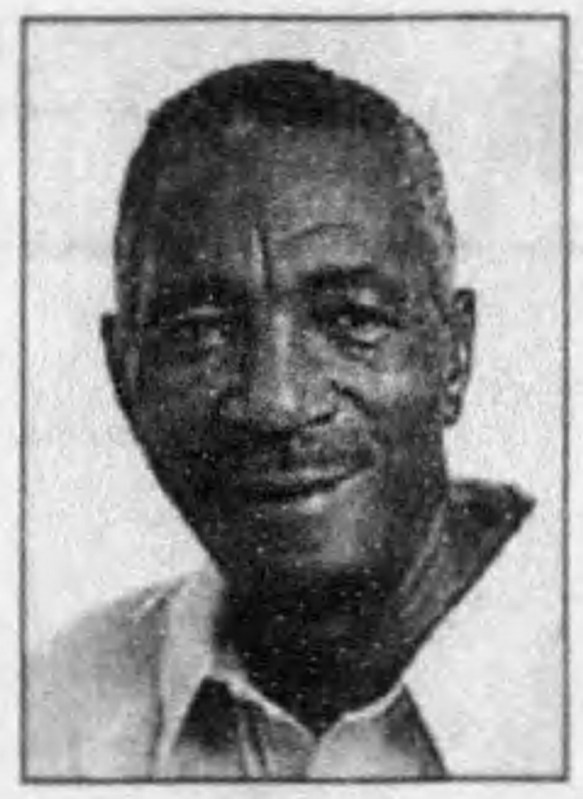
Since Felix’s time, many African American officers have joined the PPD family. Tim Poe, Doug Baldwin, Michael Richardson, Jerry Smith, Ricky Harris, Demetrius Stallworth, David Alexander, and Eric Randall to name a few.
Minority officers, black, Hispanic, Asian, Islander, and female, have had an uphill battle for many years in law enforcement. Thankfully, the department looks beyond that and all are considered family.
Mike
 The Pensacola Police Historic Society
Leave a comment