By Mike Simmons
Pensacola Police Department, Florida
End of Watch Saturday, September 16, 1944
In many professions, or crafts, or businesses, sons take after their fathers. Why? Because it is what they know. For instance, if a farmer has a son, the young man learns daily from seeing father’s work and hearing his comments and helping with the planting and the fertilizing and the harvesting, from repairing the tractor to selling the product. When he becomes a man, the natural inclination is for him to go into farming, perhaps taking over the family farm.
But what about police work – does the same principle apply? Yes, it does, sort of. When a son or daughter watches her father or mother strap on a gun belt every day and head out to serve and protect, they see it from the inside. They see what the parents go through, how they feel, and they see their passion to make their community better. They also get to know and admire the other officers. It kinda grows on you. So, when a young person enters adulthood, he or she has been trained every day for years in a lot of the small details for being a cop. Sure, there are things still to learn – lots of ‘em. But because they have admiration for the officer that they have seen every day, they adopt the same passion and desire to make their community better.
That’s what William Henry Connors did. His dad – known as Bobo Connors – was a Pensacola Police Officer when Henry was growing up. He saw his dad work long, dangerous shifts for little pay. He saw his dad miss birthday parties and holidays and school and church events. He saw the good and the bad of police work. So, when his time came to choose a career, what did he know best? Police work. He wanted to be a Pensacola Police officer, just like his dad. He was “Little Bobo.”
So, when he marched down to the police station – the same building that he felt he had grown up in, he announced that he wanted to be a policeman, the old guys were glad. Glad to have him carry on the tradition. But nobody called him “William,” or “Henry,” or “Bill,” or “Hank.” They called him “Bobo,” the name he had always had, after his dad.
When a young person becomes a police officer, he doesn’t tell the older cops what his name is. Oh, he might tell them, but it doesn’t matter. They might call him by his given name, but they might not. They might name him. And he can’t fight it…with any success. For instance, the officer that expressed his opinion about an injured person on the street one evening was known as “Doc” from then on. Or the young officer whose name the chief couldn’t pronounce, so she was known as “Mary,” her middle name, for many years. Or the young man with the shock of ginger hair on his head was known as “Red.” But, what if the young officer didn’t like it? Tough.
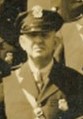
In 1944, Corporal William Henry Connors, 61 years old, had been a Pensacola Police Officer since 1921. But nobody knew him as William, or Bill, or Henry. He was “Bobo.” He had been called Bobo his entire career. The younger officers didn’t even know what his real name was. He was Bobo. Why was his father known as Bobo? No one knew.
Bobo was the guy that everyone wanted to be around. Wherever Bobo was, you could be sure it wasn’t boring! Part of Bobo’s popularity among his fellow officers and the citizens was his job assignment. In those days, automobiles had become the major source of transportation, and the manufacture of affordable machines was exploding. Cars were everywhere. Traffic laws had not yet caught up, so, in addition to traffic lights – which some people actually paid attention to, an officer was placed in the middle of the #1 intersection in Pensacola – Garden and Palafox Streets.
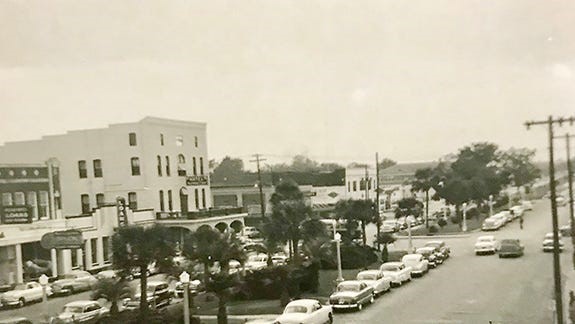
The officer assigned to this all-important spot had to be able to keep his eyes on traffic in all directions at once. He had to have a command presence as well as a cool temper, because drivers would try it! It also helped if his face was a familiar one. It helped more if he was likeable.
Bobo Fit the model perfectly. Everyone knew Bobo, and he eventually “owned” that intersection. Whether he danced while directing traffic is not likely, but he was comfortable there, so much so that, when he took vacation, a story was run in the newspaper so everyone would know why he wasn’t in the middle of the street! Eventually, he was promoted to Corporal. His face was no longer seen at Palafox and Garden. He spent most of his time at the station. But Bobo had another job.
Bobo drove the patrol wagon. The patrol wagon driver was a senior officer who had earned it. For the most part, he would remain at the station for much of the shift, helping the desk sergeant. When everyone was busy or when he was needed to transport an inmate, he would pull the wagon out. The wagon was a different animal. It was big, heavy, and hard to manage. The driver sat up in the seat and, leaning over, he steered the big horizontal wheel, usually bouncing around in his seat. Most of the time, the wagon was driven far faster than its capacity.
On Saturday night, September 16, 1944, Corporal Connors, and Officer Lester Taylor were responding to an emergency in the patrol wagon[1]. The vehicle passed the intersection of Baylen and Zarragossa Streets, Connors, who was driving, suddenly slumped over the wheel and was unresponsive.
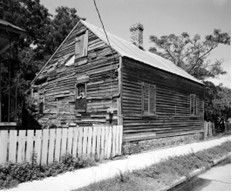
Officer Taylor immediately took the wheel and pulled the vehicle to the curb in front of 214 W. Zarragossa, the historic Julee Cottage. He radioed that the Patrol Wagon could not respond to the call, and to send an ambulance to his location immediately. Officer Connors died at 8 pm that night, presumably from heart failure, leaving the members of the police department in shock.
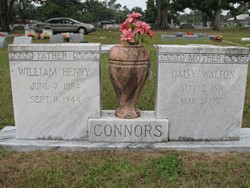
Officer Connors left behind a wife, Daisy Walton Connors, two sons, William R. and George W. Connors, two daughters, Mrs. Frances Davis and Miss Maxine Connors, two sisters and three grandchildren.
***
[1] September 12, 1944 edition of the Pensacola News Journal. Accessed 06/12/2022. https://www.newspapers.com/image/352831670/?terms=%22Bobo%20Connors%22&match=1
 The Pensacola Police Historic Society
Leave a comment