
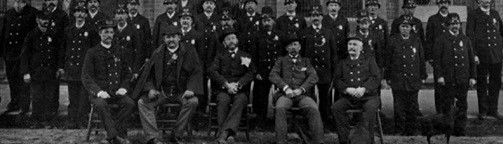
Pensacola Police Department, Florida
End of Watch Sunday, September 22, 1889
Even though law enforcement officers had been around for nearly 70 years, American West Florida had never experienced this.
What could he do? He didn’t have a job, much less a skill…other than farming. John Gordon felt the pressure. After the young couple got married, they realized that they could live on love for only so long. They needed groceries! And job prospects weren’t very good in the post-civil war devastated South.
But Pensacola didn’t depend solely on farming for income. So that was it. The young Gordon couple escaped from their war-devastated Montgomery, Alabama, and settled in that city by the bay known as Pensacola. But what could John do? The only skills he had were learned as a farmer.
But when the Pensacola Police Department reorganized on February 16, 1885, John Gordon was one of the men whose name was added to the police rolls[1]. He earned $60 every month, or about $15 a week. He finally found his profession!
What did his job consist of? First, he wore a dark blue wool uniform – winter or summer. It consisted of a long, heavy wool jacket with a badge, and long wool pants, with black leather shoes. He wore a custodian helmet (most people call it a London Bobby Hat) with a belt around his jacket, and he carried a truncheon, or night stick.
His job was very simple – to keep the peace, which can become complicated. He walked a beat, almost always in the downtown area, where he knew just about everyone. The policeman, even though he treated people with courtesy and respect, had to have a tough side about him. If someone needed to go to jail, they went – like it or not. And it was his job to get them there. He usually won!
On the evening of September 21, 1889 – a typical, wild Saturday night – Officer Gordon arrested David Sheehan, an engineer on the steamer Echo, at Palafox and Zarragossa Streets. When Gordon placed him under arrest, Sheehan resisted, drew back, and struck Officer Gordon, who brought him under control with his night stick. The next day, Officer Gordon was again walking his beat at Palafox and Zarragossa Streets at 6:30 pm when he was approached by the same David Sheehan, who had bonded out earlier. Sheehan had been drinking. He accused Gordon of striking him unnecessarily.
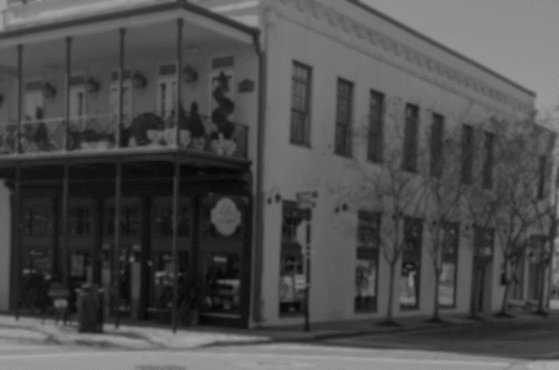
Officer Gordon explained that he was just doing his duty, saying, “Dave, if you was an officer like me standing on your beat and I walked up and struck you like you did me and got clubbed, it would be right[2].” Sheehan turned his back on Gordon, pulled a handgun, and turned back toward the officer. Gordon took cover and blew his whistle as a call for backup. He also drew his service weapon and fired. After at least five rounds were fired, Officer Gordon was struck in the left side of the chest, the bullet passing through his heart, and exiting near his left arm pit. Gordon knew it was bad. He could feel it.
In a few minutes, his breathing became slower and shallower, then, about twenty minutes later, it stopped. He would suffer no more, but his wife and children would. They would never see him alive again. He would never again go fishing with his son, and someone else would have to give his daughter away at her wedding.
The shock! No police officer had ever been killed in their town before. Gordon was part of the community, part of them. And he was only 35 years old – in the prime of his life. His wife and three children received his pension. Following the coroner’s inquest, Officer Gordon’s body was shipped to Alabama for burial.
Ninety days later, on Friday, December 20, 1889, the courthouse was full, waiting to see the punishment that the man would get for murdering their friend. However, Sheehan was a favorite in town. What would that do to the jury?
The trial proceeded with witness after witness testifying as to what they saw. Sheehan testified also, giving his side of the story. But John Gordon couldn’t testify. He wasn’t able to tell the jury what Sheehan said or did to cause the incident, or what Sheehan said the next day.
“Not Guilty.” What? Why? Maybe it was the weight on their shoulders, maybe it was that they couldn’t face people if they saw their loved ones on the street. It didn’t really matter, but the jury acquitted the killer.
Rest in Peace, Officer Gordon.
[1] Pensacola Commercial, pg 3, Feb 18, 1885, acquired 10/10/2022
[2] The Pensacola News Jan 24, 1889, acquired 10/10/2022
 The Pensacola Police Historic Society
Leave a comment