
The Pensacola Police Department is one of the most unique and historic police departments in the United States. Evidence exists that a jail and police station existed in town continually beginning in 1763. Since that day, ten locations for jails and police headquarters have been recorded. Following is a list of them:
First Station: Outside the Fort of Pensacola
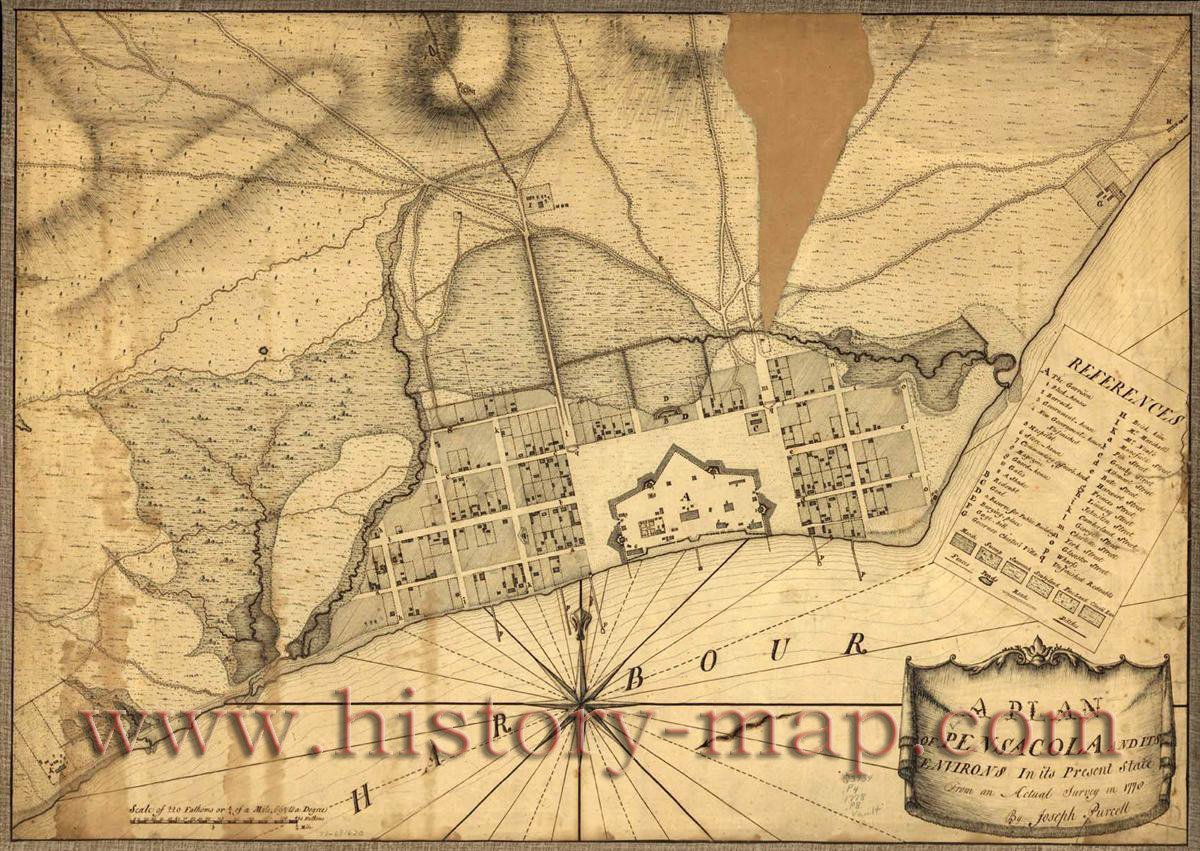
In 1763, Pensacola came under British rule. The British have always been known for their orderliness. Documents exist of the British townspeople accusing the Spanish founders of “insufferable laziness” due to the “deplorable” state of the village upon the arrival of the Brits. When the British took control of West Florida, the priority was to design and create a proper town. This meant laying out streets that were equal in distance and equal distance apart. Lots were drawn up and laid out equally. The existing streets were renamed for British politicians, statesmen, and heroes, and new ones were given British names. A British surveyor, Elias Durnford, was commissioned to do the layout. The jail was assigned to the northeast corner of the fort compound on the outside of the fort itself. It began as a small wooden building. No pictures or drawings of the small lockup exist.
Second Station: Intendencia and Alcaniz
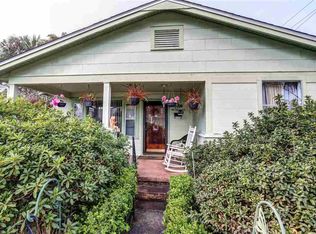
In 1776, Joseph Purcell drew up a new map. Included in the map was a building labeled “Prison, a brick building” within the garrison (Granby and Charlotte Streets). In 1778, as the city expanded, another Pensacola map of Joseph Purcell showed a “Gaol (old Spanish word for jail), built of brick.” The small building was located on the Southwest corner of Alcaniz and Intendencia Streets, the same location – just different street names. Shortly after they began to establish a town in Pensacola, the British entered the Revolutionary War to defend against the newly formed colonies in America. Part of the war was known as the Gulf Coast Campaign in which the Spanish sought to conquer from Great Britain the settlements along the coast. New Orleans, Mobile, and Pensacola were among the targets. “The Old Calaboose.” It is a name that elicits visions of a creepy, falling-down old building. That is what it was – at least after a while. In the late 1700s, the calaboose was built on the southwest corner of Alcaniz and Intendencia Streets. In 1835, the calaboose was in such disrepair that the city finally decided to tear it down.
Third Station: Zarragossa and Adams Streets
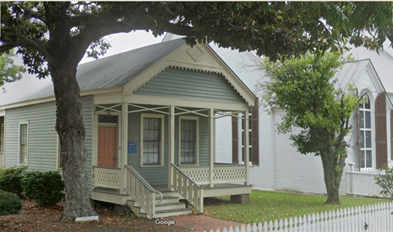
On August 2, 1824, the Pensacola Gazette published an article stating that the town of Pensacola had repaired the basement of the old Government House and turned it into a jail. The station was temporary – until the old calaboose was razed and another built. The building was located on Zarragossa Street approximately 100 feet west of Adams Street on the north side of the road.
Fourth Station: Alcaniz & Intendencia
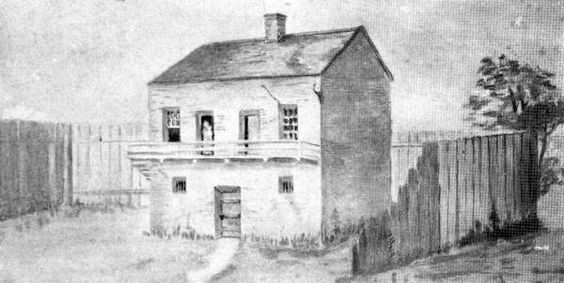
The April 12, 1838, edition of The Pensacola Gazette contained the following article:
In 1836 the city erected a good and substantial jail on the site of the old Spanish Calaboose. This building was a two-story brick building. The bottom floor was for the prisoners, and the cell which housed all of them was 15 feet by 16 feet. The second floor was where Fransisco Touart and his family lived. Touart’s duties included looking after the peace and quiet of the city, committing and releasing prisoners, ringing the city bell on all proper occasions, and feeding the prisoners.
Fifth Station: Tarragona and Main Streets
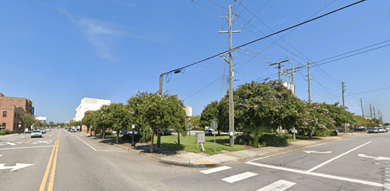
With a larger department came the need for a larger headquarters. This problem presented itself almost immediately upon reorganizing. Finally, in 1887, the department moved to a building located on the northwest corner of Main and Tarragona Streets. Five years later, the city of Pensacola and the county of Escambia built their law enforcement buildings across the street from each other. On the northwest corner of Jefferson and Main Streets, the new police station and jail were erected, and the Escambia County Sheriff’s building, courthouse, and jail were located on the northeast corner.
Sixth Station: Jefferson and Zarragossa Streets
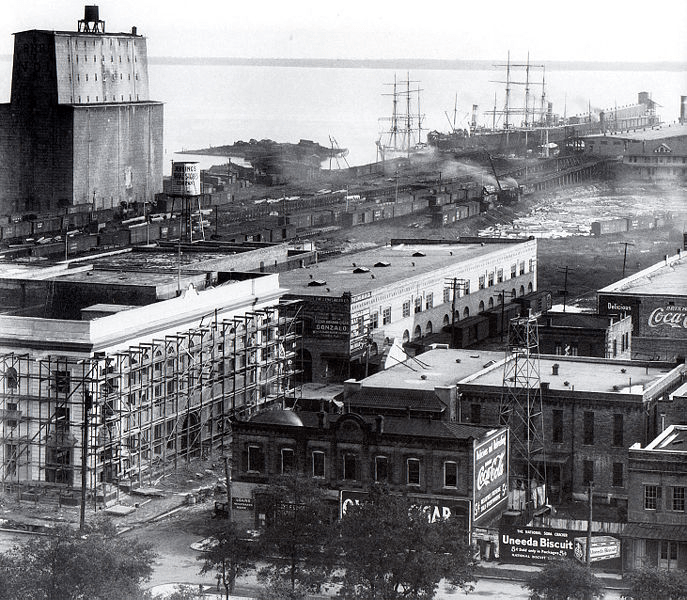
One of the results of the new provisional municipality was a decision that was made to erect a new city hall and jail. The new building, located on the southwest corner of Jefferson and Zarragossa Streets, was to house several city offices, including the police department and jail. In 1889, the announcement was made. The Pensacola Police now had a new building in which they could conduct business. The modern facility held a police office, jail cells, and an apartment on the first floor. The marshal’s office and the police court were located on the second floor. The city commissioners held regular meetings in the courtroom upstairs. The Pensacola force was ready for the 20th century!
Seventh Station: Jefferson and Zarragossa Streets
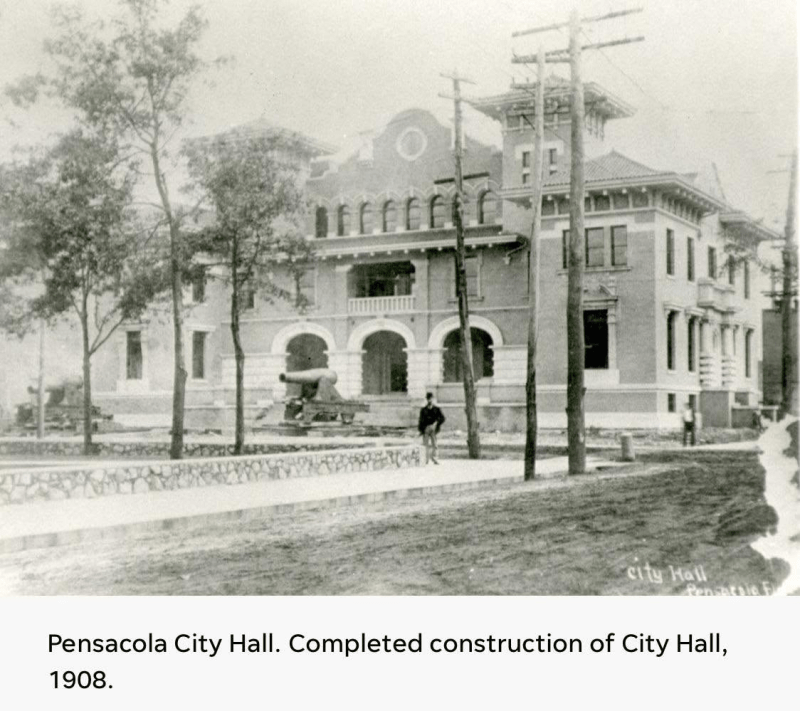
After sixteen years together, the realization hit the city fathers that one building was insufficient to conduct city hall business as well as to house the police department. Plans were drawn up for a magnificent city hall and an independent police station. The property chosen for city hall was located on Jefferson Street between Church Street and Zarragossa Street, directly east of Plaza Ferdinand. The location for the new police headquarters would be in the same location as the current city building – 407 S. Jefferson Street. An entirely new building would be built especially for the police department. To provide for the destruction of the old and the construction of the new building, in 1906, the police department temporarily relocated next door to the southwest corner of Jefferson and Zarragossa streets.
In 1907, the old city building was vacated, as the new city hall was ready for occupancy. For one year, the police department operated out of a small, nondescript building and the city offices were enjoying the new, large edifice. It was built for $8783.33. The city government remained in that location until it relocated to a new 10-story building at 222 West Main Street in 1985. In 1988, the T. T. Wentworth Florida State Museum opened in the old city hall building.
Eighth Station: Jefferson and Main Streets
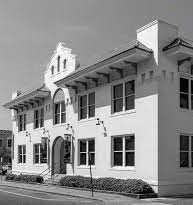
Finally, on February 29, 1908, the new police station, located on the Northwest corner of Jefferson and Main, was ready. For $4011.67, it was turned over to the city officials at 11 AM. Two hours later, the furniture was being moved in. By the end of the day, the move was complete. The building was a state-of-the-art building, erected for effective enforcement of the law. It contained a front desk and lobby, two telephones, offices for policemen, a modern jail, a kitchen, and office facilities for the marshal and chief. A separate issue also came up. Main Street ran along the south side of the station, near where the street cars picked up and dropped off. Mothers complained that they and their children could see the prisoners. Consequently, the city contracted to have a 10’ wall erected around the entire building.
Ninth Station: 40 South Alcaniz Street
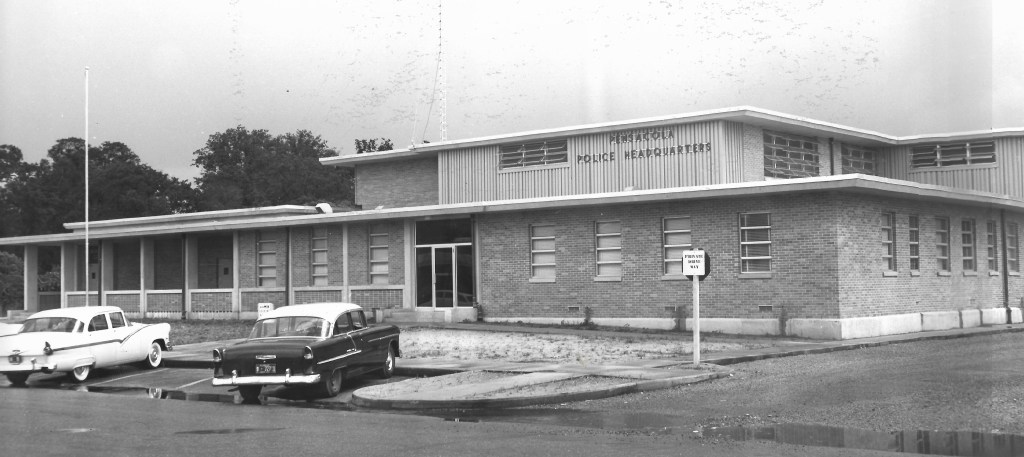
Under Chief Hall’s direction, many changes occurred. On August 5, 1956, the new police headquarters and jail were occupied and considered open for business. The location was 40 South Alcaniz Street on the south side of St. Michael’s Cemetery. The two-story building was described by the local news as a modern crime-fighting edifice, complete with a detective bureau, a records section, and an entire jail facility which included a kitchen for cooking meals for the inmates. The north end of the building was occupied by the U. S. Navy Shore Patrol.
Some prisoners named them. The rats in the city jail were so regular that they became friends with the bored prisoners. By 1980, the city jail that took up a lot of space in the police department was old, smelly, vermin-ridden, and hot. The lighting, which existed only in the hallways, was dim. Instead of prisoners being issued jail jumpsuits daily, they simply wore their underwear due to the often 100+ degree temperature. In June 1980, local attorney Ron Shelley filed a class-action lawsuit in federal court claiming poor jail conditions and police brutality. Shelley had filed a similar lawsuit against the county jail a few months earlier. The city jail only housed pretrial detainees, and there were usually only about 20 city prisoners at any given time. Deplorable conditions, fights, a federal lawsuit, and ever-increasing mandates helped the city fathers decide what route to take. They offered to pay Escambia County $38 per inmate per day to house them. The county commissioners, whose response to the lawsuit was to build a new multi-million-dollar correctional facility, agreed. As a result, the city jail closed in early 1982, leaving the old building on Alcaniz Street as a police administrative office building only. As a whole, the jail burden felt like a weight lifted. One dark spot was losing “Miss Lucy.” Lucy Jordan, the city jail cook, was forced to resign after 17 years. Miss Lucy’s cooking was so good that some inmates looked forward to being locked up so they could eat her cooking. Officers also felt like that, since Miss Lucy cooked for them as well. An era had come to an end.
Tenth Station: 711 N. Hayne Street
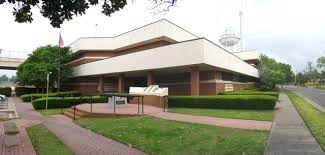
It was an old building. The roof leaked, and the old carpet smelled. Most of it, the old jail, was no longer used. Since the U. S. Navy’s Shore Patrol had vacated the north part of the building, it wasn’t being used either. The location, 40 South Alcaniz Street, offered little room for vehicles, and the location was in a floodplain. In addition, the new demands for the department called for a new building design (more room needed for the Communication section, Investigations, etc.) It was time for a new one. In October 1987, officers and movers worked quickly relocating to the new building at 711 North Hayne Street. For the past couple of years, many minds joined to create, design, and build the new building. The new, modern building offered roomier offices, a state-of-the-art communications section, a quality training section, and a first-rate Patrol section. On February 5, 2019, the author interviewed one of the officers who was crucial in bringing about the building of the police station on Hayne Street. Lt. Charlie DeCosta was born on December 16, 1941, in Jacksonville. In 1959, Charlie found himself stationed onboard an aircraft carrier in Pensacola. In 1963, civilian DeCosta returned to Pensacola and began looking for a career-worthy job. He got offers to interview with the postal service and with the police department. He chose to become a police officer and began his 31-year career on August 5, 1967. In his 31-year career. In the early 1980s, the need for a new police headquarters arose. It was determined that the cost to build a new building would be less than to remodel the old one. Charlie was chosen by Chief Goss to input his ideas and opinions on how the new building should be designed. Finally, the department relocated to the new, 31,000 sf, $2 million building designed by Donald Lindsey and built by the Norton – DelGallo Company. It was truly a practical building to be proud of, with a lot of thought put into the location of offices and adjacent meeting rooms, communication centers, etc.
 The Pensacola Police Historic Society