
Pensacola Police Department Heads
Throughout the rich history of what we call Paradise, many officers have been named to take the lead in keeping law and order. Over the years, some records have been lost or destroyed, making a comprehensive list of department heads difficult, and maybe impossible. Below is a list beginning with the arrival of the British government in 1763.
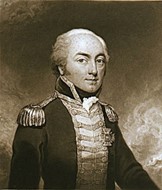
In 1764, shortly after West Florida was ceded to Great Britain from Spain, the British Provincial Council appointed one man to hold the positions of deputy provost marshal and marshal of the territory – James Johnstone. Even though these two positions held specific duties, they were in essence performed together by one person – the nephew of the governor.
If one traveled from Great Britain to Pensacola in May, a huge surprise awaits. Across the sea, a low of 44 degrees might make it to 60 on a warm day. As visitors arrive on the shores of the northern gulf coast in May, Pensacola natives often witness the shedding of coats and hats. The high temperatures have already reached a humid 85 or 90 and the lows won’t dip below 70 for several months. When Marshal Johnstone stepped off the ship on May 8, 1765, he no doubt felt the change immediately. Historical documents infer that Marshal Johnstone was less than pleased with his appointed station, and the weather likely contributed to his unhappiness.
One of the first recorded arrests made in West Florida occurred in 17664. Governor Johnstone was a controversial leader and often found himself at odds with the military leaders in Pensacola. On one occasion, the governor and British Lieutenant Colonel Ralph Walsh, a newcomer to the area, had a misunderstanding of the disposal of government property. Johnstone ordered the arrest of Walsh by military officials. The order fell on the shoulders of Walsh’s contemporary – Lieutenant Colonel Edward Maxwell, who refused to carry it out, despite the governor’s insistence. Exasperated, Johnstone ordered his nephew to arrest Walsh. When that didn’t work, the governor himself arrested Walsh and turned him over to his nephew. Within days, cooler heads prevailed. Walsh was released and ordered to Mobile, Alabama against the governor’s wishes.6
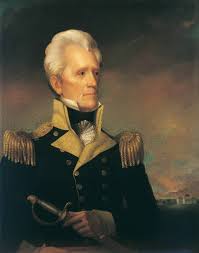
James Craig, Alguazil: 1821-1821: Upon accepting his new territory, Governor Andrew Jackson got to work setting up the government of the new town of Pensacola. He began by appointing officials to preside over the local government. For the position of alcalde, he named his longtime friend, Judge Henry Brackenridge. The alcalde was an all-powerful position, second only to the governor. The alcalde was the mayor, chief of police, sheriff, superintendent, inspector of prisons, and notary public. Jackson also named the aldermen, harbor master, health officer, and a resident physician. The next day, he appointed James Craig as the alguazil, which is the Spanish word for Constable, Marshal, and Police Officer.
Colonel Pier, Alguazil: 1821-1822: On August 18, the Pensacola Gazette reported that Governor Jackson had appointed Sheriff Colonel Pier as the second alguazil.
The Pensacola City Constable: Over the next 18 months, a new ordinance was drawn up by the city fathers describing the duties of the city constable. However, it wasn’t until October 11, 1823, that the following ordinance was listed in the Pensacola Gazette:
An Ordinance for the City of Pensacola
Sec 2d: There shall be appointed by the Mayor a person to be called the City Constable, and another person who shall be recommended by the City Constable, and for whose acts he shall be responsible, to act as his deputy.
Sec 3d: It shall be the duty of the City Constable and his deputy, to see that all Ordinances of the Board of Aldermen are duly executed, and to cite and bring before the Mayor all offenders, in order that they may be duly proceeded against. – It shall also be their express duty to arrest and confine, until they can be brought before the Mayor, for examination, all disorderly and suspicious persons and slaves found abroad without written permission from their masters or mistresses, after the ringing of the Bell, which it shall be the duty of the City Constable to cause to be rung at eight P. M. from 15th September to 15th April, and at nine P. M. from 15th April to 15th September in each year.
J. N. Brown, Constable: 1822-1823
James Ingraham, Constable: 1823-1824
Florencio Comyns, Constable: 1824–1825
Foster Chapman, Constable: 1825–1827
Florencio Comyns, Constable: 1827-1830
Henry Nunes, Constable: 1830-1830
Pensacola had a new identity. It was part of the young United States, the country that was growing in size, popularity, and power. But the growth didn’t come without a price. Many issues had to be settled between the old Spanish regime and the new American government. At the same time, an influx of new businesses began to pour in. The population of the town grew from 250 residents in 1821 to 1900 in 1831 – a 750% increase!
With the number of sailors, civilian workers, and family members increasing, law enforcement in Pensacola naturally stepped up. As expectations rose, so did the number of employees, the amount of equipment, and the need for a new jail. When the U. S. Navy made a home in Pensacola, the city fathers quickly realized that the current system in place for enforcing the laws was insufficient and needed to be upgraded. They researched the latest trends in law enforcement in the United States.
In old France, some of the great homes were so large and complex that they employed a stable officer known as a mareschal. Before long, this term came to refer to the officer of the house. The title became so lauded that the English translation, Marshal, began to be used for the head officer of armies and countries. Across the sea, the title was often used as the head of law enforcement, and the town of Pensacola was no exception.
Edward Senae, City Marshal: 1830-1834: On June 12, 1830, Pensacola’s first elected Marshal, Edward Senae, took control of the law enforcement in the town.
John Gonzalez, City Marshal: 1834-1837
Elliott Headington, City Marshal: 1836-1838
John Stuckey, Jailor: 1837
Peter Woodbine, Jailor: 1839
George Willis, City Marshal: 1838-1844
Lafayette Robertson, Jailor: 1843
Frances Touart, Marshal: 1844-1846
James Bentley Roberts
Joseph Comyns, Constable: 1877
George Wells, Marshal: 1882 – 1883
Richard Gagnet, Marshal: 1883 – 1885
Duncan Mallett, Marshal: January 1885-February 1885
Joseph Wilkins, Marshal: February 1885-March 1885
Duncan Mallett, Marshal: March 1885-January 1887
J. B. Roberts, Marshal & Chief of Police: January 1, 1887-January 15, 1889
As Marshal Wilkins resigned, the city commissioners, with the governor’s approval, appointed J. B. Roberts as Marshal. He also became the chief of police. However, it was soon realized that, per ordinance, the chief of police must be a Pensacola Police Officer, which Roberts was not. Consequently, J. B. Roberts resigned, recommending Captain Connors to replace him.
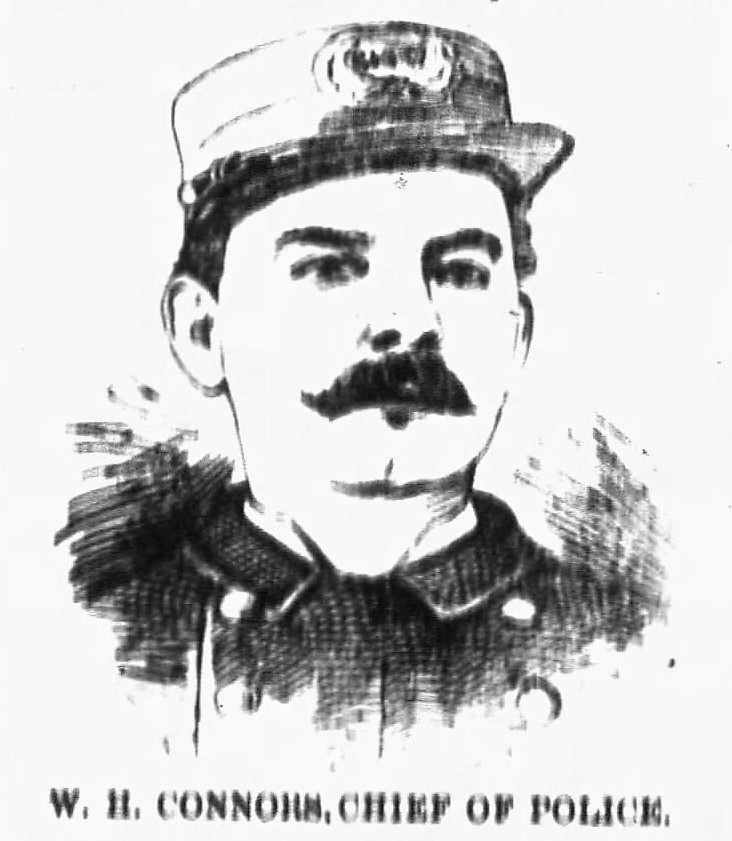
William H. Connors, Chief of Police: April 26, 1889 – March 8, 1891: On February 14, 1890 the following article appeared in the Daily News: “By the provisions of the law creating the municipality of Pensacola, the Sheriff of the county is made marshal of the city and head of the police force. All recommendations for appointment on the force are made by him for the Police Committee of the City Board. The Chief of Police has the immediate supervision of the force when on duty.”
On March 8, 1891, The Pensacola News reported that the lawsuit brought about by Marshal Joseph Wilkins took a turn. The lower trial court and the state court of appeals ruled against Wilkins, but the State Supreme Court ruled in his favor, giving him back the office of marshal, and causing the position of Chief of Police to be null and void. Marshal Joseph Wilkins retook the reigns.
Joseph Wilkins, Marshal: March 8, 1891 – August 22, 1893: After Joseph Wilkins was reinstated as marshal in 1891, he held the office respectfully. He did not seek reelection for marshal in August 1893. On October 29, 1893, Joseph Wilkins, while in the community of Millview west of town, died suddenly. The funeral took place at St. Michael’s church on Palafox Street at 10:30 AM on October 31. It was said to be one of the largest funerals Pensacola has ever seen. His remains were brought from Millview to the home of James, his brother, on Intendencia Street. From there a procession of many people made their way to Palafox Street and up to the church. After the funeral, the burial took place at St. Michael’s cemetery.
William H. McDavid, Marshal: August 22, 1893 – June 7, 1895: As the election for marshal inched closer, six officers threw their names in the race for the position. William McDavid and James Farinas, officers with the department, received the most votes. Captain McDavid received 213 votes and Captain Farinas received 127. On August 22, 1893, William McDavid assumed the office of marshal. He held the office capably until the time for his reelection on June 7, 1895. He decided to run – his competitor being the popular train conductor, Edward Wallace. The race was a tight one, and well-publicized. On June 4, Marshal McDavid withdrew his name, allowing Mr. Wallace an easy victory.
Edward A. Wallace, Marshal: June 7, 1895: On Friday June 7, 1895, Edward A. Wallace was elected as town marshal. He had already accepted the position of chief of police. By 1899 Wallace had gone to work for the railroad. On July 2, 1900 at the age of 39-years old he was involved in a railroad accident near Selma, Alabama in a small town called Aldrich. He was a conductor on the Southern Railway run between Selma and Birmingham when he lost his footing and fell beneath the train and was killed. His wife’s brother Fred Massy was given the responsibility to go to his Warrington home and inform his wife of her husband’s death. His body was returned to Pensacola and buried in St. Michael’s Cemetery.
Frank Wilde, Marshal & Chief: December 31, 1897–June 4, 1901: On December 31, 1897, Frank Wilde was elected the new Pensacola marshal. There was a small but distinct difference between the marshal and the chief of police. The marshal was the old elected position that had been in existence from the days of Andrew Jackson. However, sixty-four years later – in 1885 – the police force became a function of the City of Pensacola and was led by an appointed chief. The two positions were often held by the same person, but not always. Neither position possessed the authority to hire, fire, or, suspend. These decisions came under the authority of the Board of Public Safety. It was not until 1931 that the city officials reorganized the form of government and began operating under a city manager that the chief became the department head with full authority over his agency. At that time, they dissolved the position of marshal and the police department head was simply the chief. Wilde was initially appointed by the board as deputy city marshal. However, it was determined that, because Mr. Wilde was not a police officer, he was ineligible to hold the office of deputy city marshal. So, on July 16, 1897 the board appointed him policeman on the reserve list, and on July 23, he was elected by unanimous vote of the board members as deputy city marshal. Marshal Wilde immediately began recruiting officers on the basis of their toughness, both mentally and physically, in order to keep law and order in this growing and spirited town.
Ammie A. Credille, Marshal & Chief: June 4, 1901- June 4, 1903: On June 4, 1901, Frank Wilde and Ammie A. Credille competed in the election for marshal. Credille won. Wilde continued on as a captain on the force. Frank Wilde died on July 8, 1932 after a short illness at the age of 76 years. He is buried in St. John’s Cemetery.
An interesting fact about Marshal Credille: Not long after he was hired on July 14 1899, he was brought up on internal charges by Marshal Frank Wilde for talking to a private citizen. He plead not guilty but was convicted and suspended for 30 days. The next July 28, a relative, RA Credille, testified that the officer had been under great stress from all of the sickness in his family. He was exonerated.
C. F. Schad, Marshal and Chief of Police – June 4, 1903 – October 31, 1906
Marshal C. F. Schad took over a department that was ridden with corruption and in which morale was low. However, he built up the morale and reputation day by day, simply by doing his job.
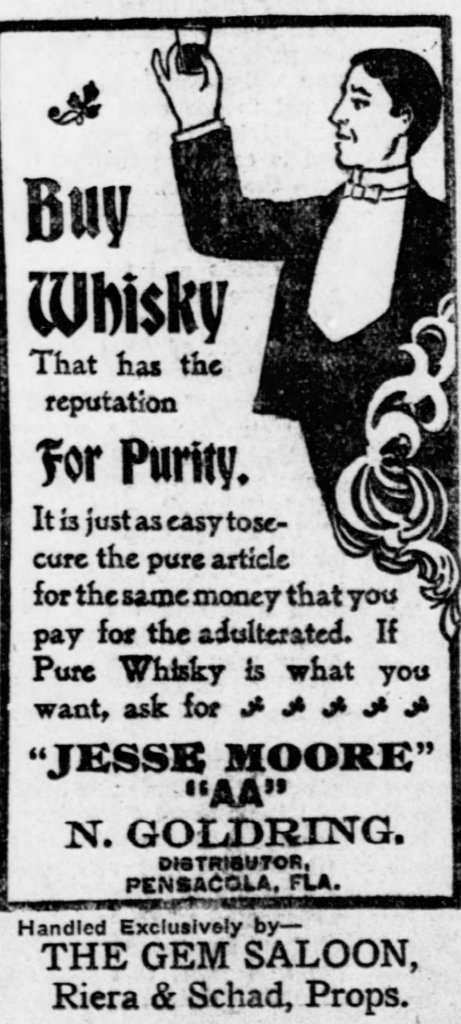
Was it a conflict of interest? Marshal C. F. Schad had to ask himself. After all, it was a reasonable question. The marshal had been wrestling with the offer of partnering with Allie Riera to open a saloon. Besides, he had just gone through the act of commanding the police force through a major hurricane, and he felt that he needed a little rest and privacy. He had sought the advice of numerous people about the wisdom of the marshal embarking on the new venture, which paid more than his marshal’s salary. When no one could sufficiently advise him, he decided for himself, and tendered his resignation to Mayor Bliss. On October 31, 1906, his last day as Marshal, his successor, Milton Frank, and Captain Fondebilla presented him with a silk umbrella at a banquet held in his honor.
In 1944, long after his retirement, Fred Schad made a trip to New Orleans for an operation. Because of the perils of the trip and operation, he developed pneumonia and died. He was returned to Pensacola and buried in St. John’s Cemetery.
Milton Frank, Marshal and Chief of Police – October 31, 1906 – June 5, 1907
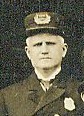
The morning after honoring Marshal Schad, Milton Frank began his new job as marshal. He was appointed to the position until a new marshal was elected in 1907. As elections go, the prospects for regular election for marshal proved to be a heated one in 1907. Milton Frank, the current marshal, was a candidate, along with Captain Fondebilla, Deputy Sheriff Frank Sanders, and others. Each man had a tough job to do while campaigning heavily. Further, Frank and Fondebilla were not keen on Sanders, the only candidate from the sheriff’s office. Candidates ran on integrity, frugal spending, and experience. It was a tough race, but Sanders prevailed.
Interesting facts about Milton Frank. The Frank family lived at 418 South “E” Street, on the corner of Main street. In July of 1912, his daughter, Anna Bell, who was 4 ½ years old, became ill and passed away a few short days later, on July 11. Her burial took place in St. Michael’s cemetery. Four short months later, on November 11, 1912, Frank filed a request in court for a restraining order to stop the Gulf, Florida and Alabama Railroad from running a track on his property. Apparently, the railroad company had begun surveying and excavating to lay track along the north side of Main street – on his property – without his permission. After a court battle, Frank won. The tracks were laid on the south side of the road.
In 1918, Milton Frank had worked his way to the rank of Police Captain. The Frank family home was situated only a few blocks from Pensacola Bay. June 11, 1918 was a typical hot day in Pensacola. Three of Milton Frank’s daughters, eighteen-year old Ruth, fourteen-year old Nellie, and twelve-year old Nellie went for a cool dip in the bay, along with their brother-in-law, Joe Russell. None of the girls could swim, but the bay was shallow and was only a few feet deep. Unknown to the girls, dredging had recently taken place in that area. All three girls went under at the same time. Joe rescued the younger girl, Nellie, but couldn’t find the other girls once he got back. One body was pulled from the bay at 10 pm and the other at 1 am. Page 6 of the Pensacola Journal contained an article entitled “Double Funeral of Two Unfortunate Sisters at 4:30 P. M. ” that started like this: “Two white-clad bodies, the embodiment of purity which was theirs in life, and thus emphasized in death, lay at the home of Captain and Mrs. Milton B. Frank last night, and a room scented with the choicest of flowers, was crowded with friends, for the terrible tragedy of the night before was learned of with most sincere grief when Journal readers picked up their morning paper early yesterday.”
Frank D. Sanders, Marshal & Chief of Police – June 6, 1907 – November 7, 1916
Frank Dent Sanders walked into his new office. He had his work cut out for him. As an outsider, he now commanded the police department. His first priority was reorganization. In an effort to keep down mutinous thoughts and actions, he demoted Captain Fondebilla to patrolman and Marshal Frank to Turnkey. Of course, these arrangements were disputed, and the case taken to the Board of Public Safety, who approved the new Marshal’s promotions and demotions.
Frank Sanders was born on August 26, 1867, in Barbour County, Alabama, and arrived in Pensacola in 1893. He married Ida Anastasia Duval Christie on September 4, 1899, in Pensacola’s St. Joseph’s Church. They had nine children, all born in Pensacola. His first job was as Chief Deputy under Sheriff George Smith, his brother in law. Sheriff Smith was quite ill at the time and relinquished almost all the duties of his office to Sanders. It was from this position that he became well-known as a good officer and a leader with a level head. As a result, he successfully ran for marshal in 1908.
An interesting fact about the office of Marshal Sanders. Although he was elected marshal by the people, he could not be appointed chief. Since 1885, a marshal had been elected, and it was expected that the appointment of the same person to the position of chief of police followed. But, due to the intense election for Marshal in 1908, challenges were made as to the qualifications of Sanders to hold the chief’s office. It was a law that the chief of police had to be a current police officer with the city of Pensacola, and Sanders was not. Before Sanders could accept the role of chief of police, he had to be hired as a Pensacola Police officer.
Upon taking over Chief Sanders immediately realized that the 12-hour shift for five to seven days a week was too much for the officers. In addition to them never spending time with their families, their efficiency was greatly reduced. As a result, he instituted a standard 8-hour shift, three shifts per twenty-four-hour period. This shift remained in effect until the 1980s.
Among the many issues that Marshal Sanders was faced with was that of discipline. Many of the officers had been allowed to conduct themselves in a manner unbefitting their position. For example, Marshal Sanders had to decide what to do about the actions of Officer Burrel Lowry when, on July 28, 1908, he emptied his revolver at a fleeing suspect near Union Depot after an attempted arrest. His negligence forced the Marshal to charge Lowery with reckless shooting and forward his case to the Board of Public Safety. The Board heard the case and suspended the officer for a period of 24-hours with a reprimand placed in his file. During his law enforcement career, Officer Lowry developed a reputation for provocation in most of his dealings, causing more than one internal investigation. On August 9, 1915, James Harrison shot at his brother-in-law Benjamin “Tom” Majors at Harrison’s home. After several shots were fired at him, Majors returned fire, mortally wounding Harrison. A coroner’s jury was convened and, after hearing the evidence, cleared him of any wrongdoing. However, Officer Lowry improperly inserted himself and his influence in the case and had to again be reprimanded. In 1916, Lowry separated from police service and became a shipyard worker.
Frank Sanders…Most Popular Person in The City: On November 7, 1916, Chief Sanders lost his bid for sheriff of Escambia county. Meanwhile, the office of Chief of Police was done away with by the city commissioners, leaving the duties of running the department up to the commissioner of police. On June 11, 1917 Sanders was elected to the office of City Commissioner, was re-elected in June 1920 and again in June 1923. He served at different times as Mayor, Commissioner of Finance and Revenue, Commissioner of Streets and Public Works, and Police and Fire Commissioner, which office he held at the time of his death. Prior to his election to the office of City Commissioner, Sanders served the City as special police officer, Deputy Marshal, City Marshal, and Chief of Police. He died in 1925 at the age of 58 and his funeral was held in his home on Wednesday, November 18, 1925. It was said by the Pensacola News Journal that Frank Sanders was the most popular person in the city in his time.
Albert Anderson, Chief of Police – 1916-1918
Cary Ellis, Chief of Police – June 10, 1918 – December 31, 1920
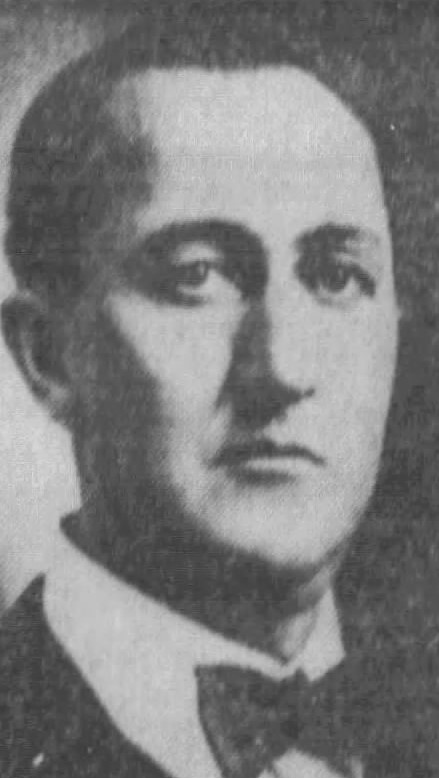
In 1891, a 17-year-old named Cary Ellis from Alabama began his career with the L & N Railroad in Pensacola as a newsboy. After only a year, Ellis was promoted to Brakeman, and in 1899, he became a young conductor. During his career with the railroad, he got married, and the pair produced three children. In 1912, Ellis ran for sheriff in a hard-fought election and won. In 1916, Ellis was defeated in his re-election run for sheriff by J. C. Van Pelt. After two years without a chief, the city commission brought back the position. Cary Ellis was appointed chief of police by City Commissioner Frank Sanders on June 10, 1918. The chief’s position had been effectively done away with in 1916, and the duties were covered by Sanders until the appointment of Ellis. Ellis was again elected sheriff in 1920, but was murdered in 1923.
Milton Frank, Chief of Police – January 1, 1921 – June 10, 1923

On December 31, 1920, the former chief of police, Milton Frank, found himself as the department’s desk sergeant. His skills that brought him to the position of chief in 1906 got him promoted on that day to Captain. Also, because Chief Cary Ellis had recently been elected sheriff, he stepped down from his chief’s position on December 31, 1920. Mr. Frank became acting chief, and later chief.
****************************************************************************
Mose Penton, Chief of Police – June 11, 1923 – October 23, 1923
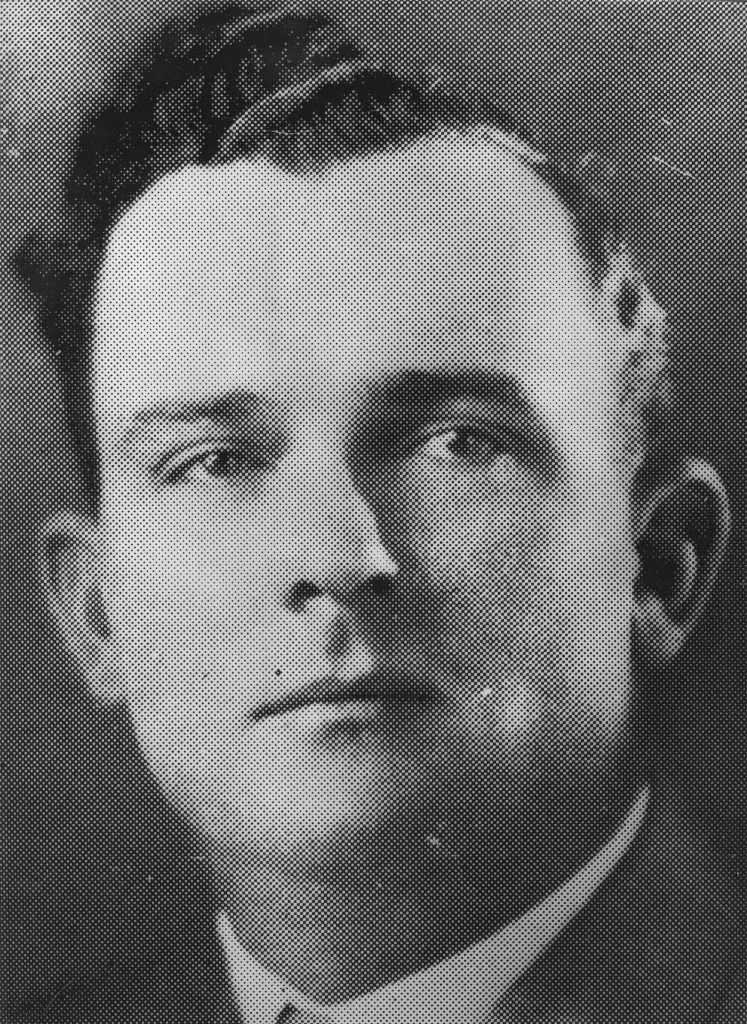
Big, tall and strong – imposing. That is the impression that the Editor of the Pensacola News Journal reported on June 13, 1923 regarding new chief of police Mose Penton. “He’s businesslike, yet amiable. In fact, his amiability, the interviewer silently prophesied, will be an effective hypodermic to keep up the morale of the police department.” During WWI, he served as a private police officer with the Pensacola Shipbuilding Company. Chief Penton, whose agenda made it appear that he was settling in for quite a while, only served four months. On September 26, 1923, Escambia County Sheriff Cary Ellis was killed while making an arrest. On October 23, 1923, Penton stepped down from his new position as chief of police after Governor Cary Hardee appointed him the new sheriff.
****************************************************************************
Ernest Ellis Harper, Chief of Police – October 23, 1923 – November 19, 1925
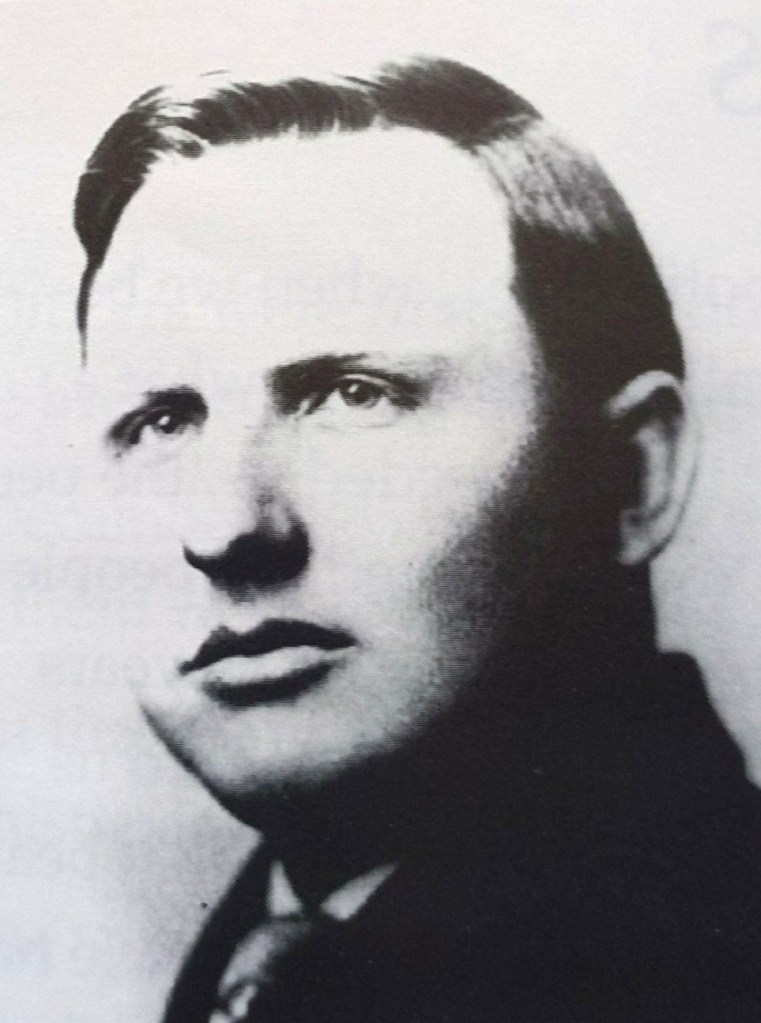
On October 15, 1923, The Pensacola News Journal reported that Captain Ernest Ellis Harper was appointed chief to replace Mose Penton. Chief Harper was born in 1890 in Roberts, Florida. He moved to Pensacola in 1909 and joined the force two years later. Chief Harper spent time as a patrolman, a turnkey and a motorcycle officer before being promoted to captain and deputy marshal in 1919. When Chief Harper took over, Prohibition was in full force. A nationwide battle was several years old, and Pensacola was no different. Reports named Sanders Beach as being a “point of sale” that was known by most officers. “The Barn,” located at 105 West Jackson Street, was the party headquarters for naval officers and others. The Black Market was very active, including shiploads being brought in and delivered to the locals at the sight of the ruins of the battleship U. S. S. Massachusetts in the Gulf of Mexico. While it is true that ratification of little to curb the consumption of legal and illegal alcohol, battle continued to rage.
On September 25, 1921, Captain Harper’s family was enjoying the fall weather at Chumuckla Springs when their 4-year-old daughter became very ill. Their daughter, Marguerite, died that evening and was buried in St. John’s Cemetery the next day. The service was held in the family home at 702 North “E” Street.
On November 17, 1925, City Commissioner Frank Dent Sanders died after suffering cerebral hemorrhages. Chief Harper was appointed to the commission in his place. He was then reelected in 1929. He then went on to become the Police Commissioner in 1930. In 1932, Harper made an unsuccessful play for Escambia County Sheriff. After his defeat, Harper became a deputy sheriff. Then, on June 6, 1933, tragedy again struck the Harper family. Harpers wife, Amelia Fleming Harper, passed away at the age of 43.
Harper continued raising his four children as a single father. In addition to Earnest, Amelia and Marguerite, the family consisted of two boys – Edward & Raymond, and two daughters – Dorothy & Jeanette. Note: Harper’s son, Raymond C. Harper, decided to follow in his father’s footsteps and become a Pensacola police officer.
****************************************************************************
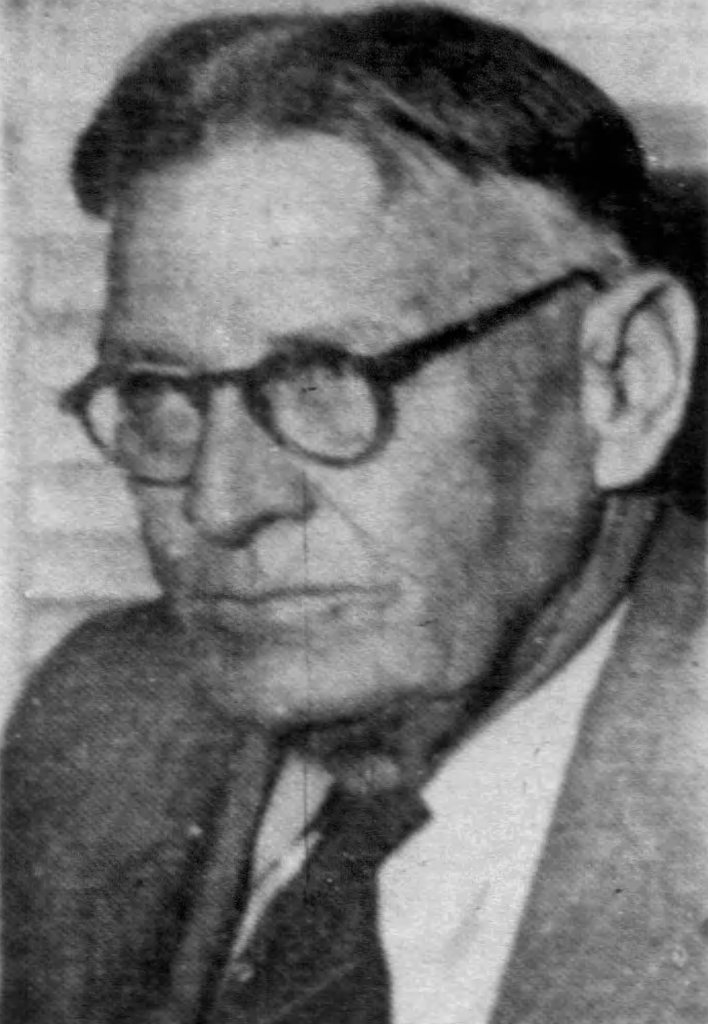
William O’Connell, Chief of Police – November 19, 1925 – July 20, 1947
William O’Connell took over as chief at the age of 42 and remained at the helm for 21 years. A 37-year veteran with the Department, Chief O’Connell served as Pensacola police chief longer than any other to date. Under his leadership, the department went through the latter years of Prohibition, the crash of the stock market, the Great Depression, and World War II. Under Chief O’Connell, the new phenomenon of automobiles becoming the primary mode of transportation came about, requiring an increase in traffic lights, traffic officers, and traffic charges. On July 20 at 9:30 PM, Chief O’Connell, after serving as Pensacola Police Chief for 22 years, died at the age of 61 after a brief illness. According to the July 22 edition of the Pensacola Journal, Municipal Judge A. Morley Darby cancelled court the day before in honor of the chief. Judge Darby said that the chief was “a grand old fellow who had a humanitarian attitude” and “who always wanted to help not hurt” persons he dealt with. Chief O’Connell’s wife had died several years earlier. He was survived by 10 children and several grandchildren. He lived at 129 West Government Street. His funeral took place at his home at 8:45 AM and St. Michael’s Catholic Church at 9:00 AM on Friday, July 25, 1947. He is buried at St. Michael’s cemetery. He was replaced by Assistant Chief Crosby Hall.
Albert Anderson – 1932-1933
Crosby Hall, Chief of Police – July 21, 1947 – October 15, 1961
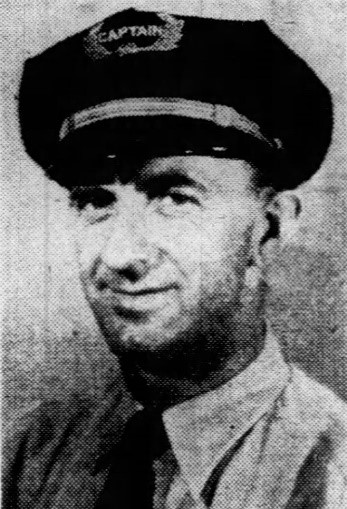
On June 14, 1947, Crosby Hall was officially named Assistant Chief of Police. “Officially,” because he had been acting as the chief in the absence of Chief O’Connell since he became was admitted into a hospital in New Orleans – where he died on July 20. On July 25, Hall was appointed chief of police by city manager Oliver J. Semmes. Hall, a military veteran, had been with the police force for 22 years. He was married and had two children.
By 1961, corruption within the Pensacola Police Department had been uncovered. The officials and citizens of Pensacola were confused and frustrated. Criticism abounded from all walks of the community. City Manager Homer D. Reed finally asked Crosby Hall for his resignation as chief. On October 15, 1961, Chief Hall resigned, mostly due to the cloud that hung over the department. Clyde Lewis served as interim police chief. Chief Hall and his wife continued to live in Pensacola at 2012 N Baylen Street and participate in community events. His wife, Lucy Penton Hall, died October 8, 1970. After her death, Chief Hall moved into a room at the St. Carlos Hotel. He was found dead on December 29, 1971, reportedly from natural causes. He was 67 years old.
Drexel P. Caldwell, Chief of Police – February 2, 1962 – July 12, 1974
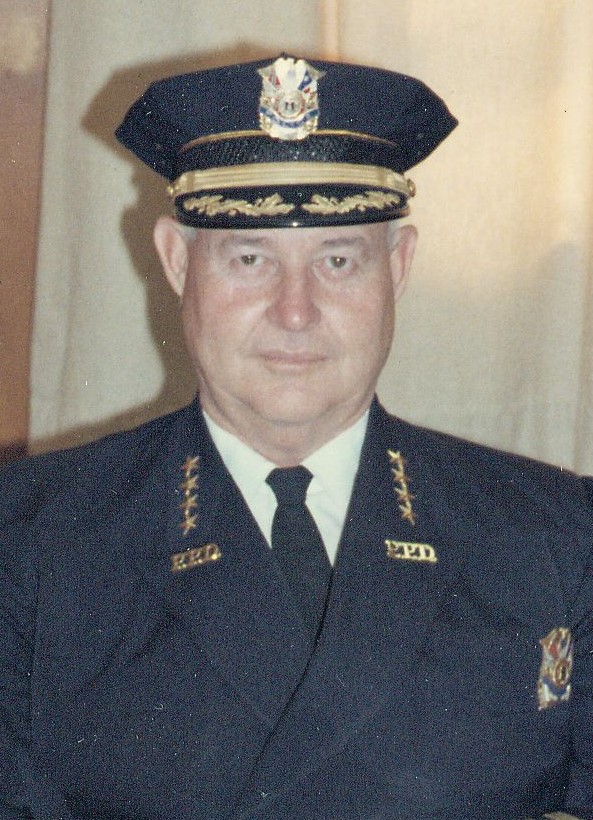
Drexel P. Caldwell was born in Luverne, Alabama in 1914. He joined the Pensacola Police Department in 1946 after his discharge from the U. S. Army. He was promoted to sergeant on April 24, 1952. Caldwell held that position during the dark days of the department, when so many officers were arrested, fined, suspended or fired. On February 3, 1962, Caldwell was named Chief of Police over a department riddled with corruption, after Chief Crosby Hall was asked to resign.
After the retirement of Chief Hall, the Pensacola City Council discussed the procedure of testing for the next chief. An outside firm was hired to handle the procedure. Three finalists were considered – Inspector Clyde Lewis, Captain James Davis, and Sergeant Drexel Caldwell. After many months and many tests, a decision was made. At four O’clock in the afternoon on Friday, February 2, 1962, Pensacola City Manager Homer Reed named Sergeant Drexel P. Caldwell Chief of Police. Reed said that Caldwell was best suited to accomplish three immediate needs – department reorganization, increased training, and rebuilding public confidence in the department. In addition to building the public’s confidence, Chief Caldwell had to rebuild the officers’ confidence in their leadership. Morale was low. He began by demanding more professionalism in their demeanor, dress, appearance and communication. He also instituted a retirement fund for the officers. Of the three needs, the one that would take longest would be to rebuild confidence. But he was ready for the task.
Chief Caldwell set in to make the department more professional. One of the first changes he enacted was to issue new badges. He issued new badges designed especially for the Pensacola Police Department to every officer. He was one of the leading police chiefs in Florida to demand more professionalism and training for his officers. Less than three weeks after his appointment, his officers were in training classes learning about the latest traffic laws.
On March 27, 1962, Chief Caldwell gave a presentation to the Pensacola City Council’s Committee of the Whole regarding the reorganization of the entire department. If approved, the department would operate under three divisions instead of the current four. Several positions and ranks were reassigned, a shift to one-man patrol cars, a medical examiner hired, the position of assistant chief abolished, an administrative assistant appointed to the chief, and a dispatch unit was recommended. All of the changes and purchase of new cruisers came at a price tag of $35,000. Reorganizing the department gave officers comfort to put their trust in their supervisors. The committee voted 6-1 for approval.
Officers underwent riot control training and classes in dealing with the public. These measures helped the citizens raise their confidence in their department.
In 1974, Caldwell was ready to retire. In the words of city manager Frank Faison, “Chief Caldwell has moved the police division from the low public opinion in the early 1960s to a first-rate organization.” Caldwell’s last day was July 12, 1974.
James Davis, Chief of Police – July 12, 1974 – August 22, 1980
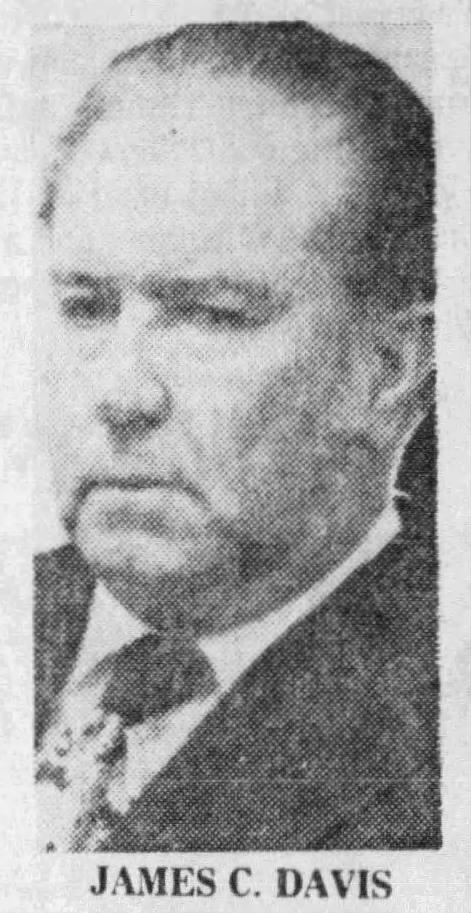
On June 4, 1974, Pensacola City Manager Frank Faison called a press conference in which he, Chief Caldwell, and Assistant Chief James Davis were present. Faison announced the resignation of Drexel Caldwell as chief. Caldwell stated that he made the decision to resign in order to run for the state senate. Faison also announced that he intended to appoint Davis as Caldwell’s successor.
On Friday, July 12, 1974, the ceremony that took place in front of 40 South Alcaniz Street was not a typical retirement ceremony. Neither was it a typical installation for a new chief of police. It was a “changing of the guard” ceremony. It involved both outgoing Chief Caldwell’s retirement and incoming Chief Davis’ installation. Caldwell thanked his officers and spoke of his confidence in his successor, an old friend and former walking beat partner. Davis thanked his predecessor for leaving him a department in good shape.
Chief Davis was an impressive man. If a police department wanted to create the perfect chief, it would be James Davis. He joined the department in 1946 – 28 years before making chief. Mild-mannered, Davis received a master’s degree from the University of West Florida and graduated with honors. He had been to the FBI National Academy and was a member of the FBI National Academy Associates. He was on the Board of Directors of East Hill Baptist Church and had an impeccable record at the Pensacola Police Department. When the chief’s exam was given in 1962 and Caldwell was chosen, Davis earned the top score.
Davis had to hit the ground running. As he took over, the racial riots were in full swing. Also, the United States’ involvement in the Vietnam War was coming to a close, so veterans were returning home. Consequently, the illegal use of drugs was gaining popularity. Marijuana, which had already been enjoying widespread use for about 10 years, was joined by hashish, heroin, LSD, and cocaine. All of these drugs had been used and misused for many years, but the consumption of illegal drugs emerged as a major problem for the Pensacola Police Department during this time.
Louis Goss, Chief of Police – August 22, 1980 – December 31, 1994
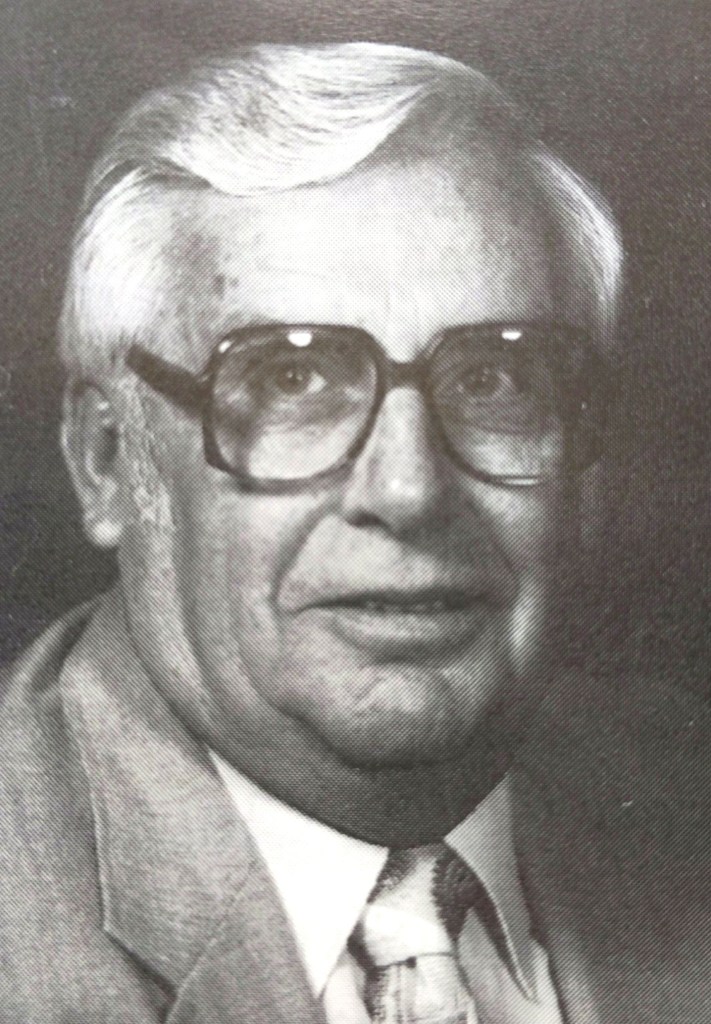
The Thursday, June 19, 1980, edition of the Pensacola News Journal reported “Chief Interviews.” The article announced the retirement of Chief James Davis and that his successor would be chosen from the applicants: Jim Billy Barnes, Glen Darling, Louis Goss, John Haner, George Underwood, Herb Seely, Richard Fuller, and Richard Yelverton. August 22 was to be Davis’s last day. He was 62 years old, with 34 ½ years on the force. He had held the top position since 1974. His plans were to…be retired.
After much testing, interviews, and careful research into the background of each candidate, a decision was made. Manager Faison announced the Louis Goss would be the new chief. Chief Davis would transfer command to Captain Goss at a ceremony at the Sheraton Inn, Alcaniz and Garden Streets on August 22.
February 1925 – Forest, Mississippi: Louis Goss was born in a small, rural logging town. He grew up working in the logging camps. His family moved to Walnut Hill where he grew to manhood. In 1943, he was drafted and fought in WWII. After the war, he met and married his wife Ruth. He joined the Pensacola Police Department on June 6, 1946 at the age of 21. In 1958, he was promoted to sergeant, lieutenant in 1965, and captain in 1971. In an interview with the media, Goss said he felt his autocratic style of leadership fit police work well.
As soon as the swearing-in ceremony was over, Chief Goss performed his first action. He crossed the street to the police station, called in Officer David Lee, and fired him. Officer Lee was a member of the Florida National Guard and had stayed with his unit longer than the time agreed upon. Goss took a lot of criticism for firing Lee.
As chief, Lou Goss implemented the department’s K-9 Unit. The Field Training Program was also established, requiring every new officer, upon graduating from the police academy, to go through the Field Training Program, substantially improving the training and lowering the liability to the department.
Norman Chapman, Chief of Police – December 31, 1994 – October 14, 1998
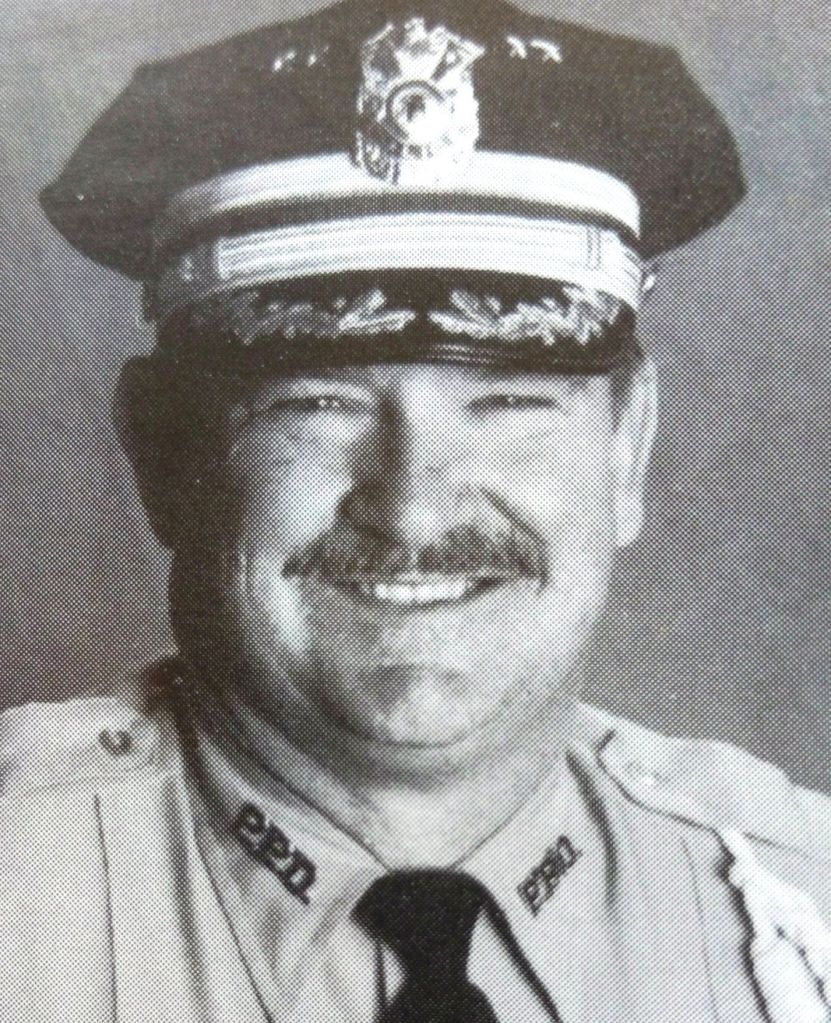
Lou Goss remained in the chief of police position for his last 14 years of a 48-year career as a Pensacola Police Officer. Under Chief Goss’ leadership, the department moved into the new headquarters, the department expanded, and new programs were begun, including the DARE program in the schools, specially trained officers in the housing developments, and the PPD Dive Team. After nearly 50 years of serving the citizens of Pensacola, on December 31, 1994, all available members of the police department fell into formation in front of the new police station for the change of command. Chief Goss, who was in uniform, spoke of his time with the department. Then, Judge Lacey Collier administered the oath of office to incoming Chief Norman Chapman. Chapman, 51 years old, was an 18-year member of the Department. The final act of the day was when city officials named the new police station “The Louis Goss Police Headquarters.” A few weeks later, Sgt Jerry Potts was promoted to the position of Assistant Chief.
Chief Chapman initiated a program that assigned police vehicles to every officer. He new K-9 corps was further developed and several sections within the department were reorganized. The changes increased morale throughout the department. Ironically, Norman Chapman was the detective in 1976 that was assigned to investigate the case of a driver who had been caught in a stolen vehicle. After many hours of the two speaking, the driver – Ted Bundy – told Chapman “Norman, this is going to make you chief.” On October 14, 1998, after only four years, Norman Chapman retired the chief’s position for health reasons. Assistant Chief Jerry Potts was named Acting Chief until a successor was named.
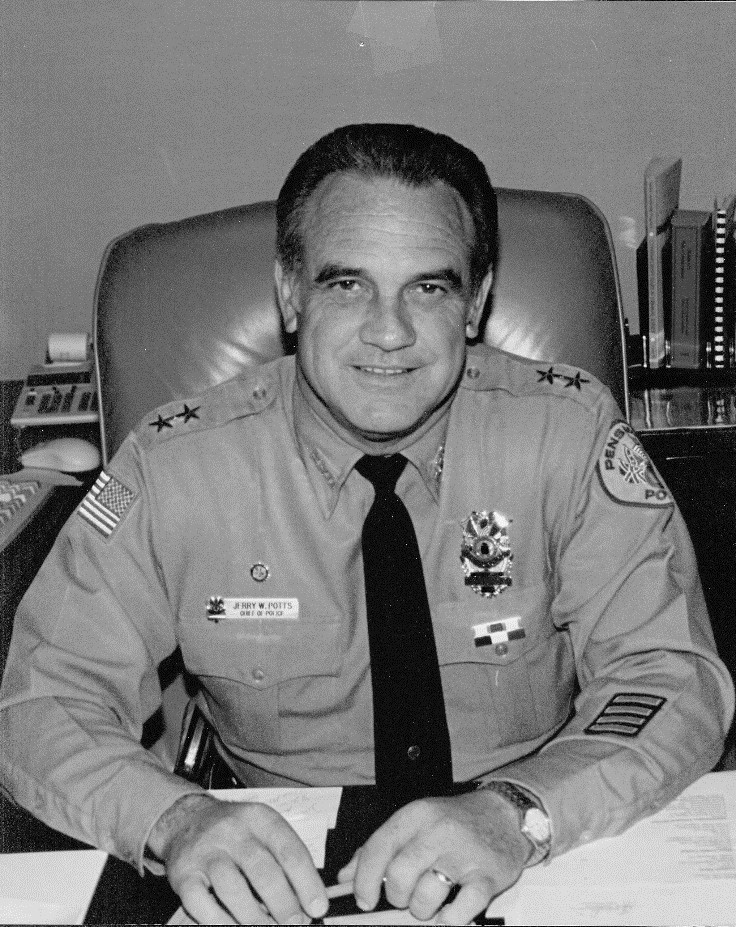
On March 27, 1948, Jerry Potts was born in Pensacola. Jerry grew up in and attended school in Pensacola. In middle school, he met his future wife, Linda. While in high school, Jerry recognized that tensions were escalating overseas in Vietnam. The United States was becoming more involved daily. After high school in 1965, Jerry joined the U. S. Army. He married Linda the following year – on August 26, 1966. Jerry went on to become an airborne soldier with the famous 82nd Airborne Division. He earned the Combat Infantry Badge before receiving an honorable discharge in 1968. On May 21, 1973, Jerry was sworn in as a police officer under Chief James Davis.
Jerry was not only a likeable officer, but he was intelligent, often using his gift for communicating to solve problems. He was one of those guys that could put someone in jail and would be thanked for it!
Jerry was soon promoted to sergeant. Shortly afterwards, he found his niche. He was assigned to supervise the traffic section. The traffic section essentially served as the traffic, escort, public relations and event coordination section. Jerry was not only called on to attend countless meetings, but he also spoke at many banquets and events, made television appearances, and served as the Department’s Public Information Officer.
On Sunday, January 31, 1999, City Manager Tom Bonfield called Jerry Potts at home. Bonfield had been working through the process of making the best choice for chief since Norman Chapman retired October 14, 1998. Jerry had been serving as the acting chief since Chapman stepped down. Bonfield began with eight applicants, narrowed the list to three, and chose Jerry Potts, 50, a 26-year veteran law officer. So, when he called Potts, he offered him the position and Potts accepted. Chief Potts was a very familiar face and well-liked throughout town. In addition to being the department spokesperson, Potts was the host of the department’s weekly television show. Numerous letters of support for Potts were sent to Mr. Bonfield from citizens. He was forever remembered by the ivory-handled chrome revolver he wore, even though most officers had transitioned to semi-automatics. People would often come up to him and say “Wow, I really like your pearl-handled revolver,” to which Jerri always courteously replied “It’s not pearl – it’s ivory.” Chief Potts’ swearing-in ceremony took place at 10 AM at the police station.
After four years as chief, Jerry Potts announced his retirement. As if he knew there would be questions, he added that he just wanted to spend time with his wife, both at home and traveling. On March 29, 2002, Chief Potts left his office for the last time. He died of cancer on Friday, August 6, 2010.
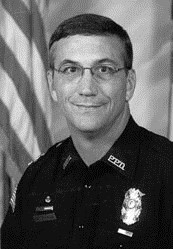
Almost immediately after Jerry Potts submitted his resignation, City Manager Tom Bonfield began the search for a replacement. It was Mr. Bonfield’s desire to, for the first time, look inside and outside the department for a replacement. Before long, 70 applications arrived on his desk. Mr. Bonfield appointed committees to look over the applicants, and to question who they thought would be the best fit. The list was narrowed to three. Finally, on March 27, the announcement was made for the new chief position – John Mathis.
John W. Mathis, 45, became the department’s Chief at a ceremony on April 8, 2002, at the Pensacola Police Department. U. S. District Judge Lacey Collier administered the oath of office, and Mayor John Fogg was the guest speaker at the 2 PM ceremony. Chief Mathis brought with him support not only from the public but also from within the ranks. Chief Mathis had been a Pensacola Police Officer for 27 years. He was married to Sue Saffran and they had four children. Chief Mathis listed community policing efforts as his priority. Under his command, the Neighborhood Policing Unit enlarged and became a division within the department. Money was found for officers to be able to have video cameras in patrol cars. Chief Mathis promoted Captain Chip Simmons to become Assistant Chief. On June 11, 2010, Chief Mathis retired. “I’ve had a very rewarding career. It’s just time to draw it to an end. This is about what I had planned all along.”

When Chief Mathis cleaned his office out, he left Assistant Chief Chip Simmons in charge as Interim Chief. Chief Simmons joined the department in 1986. He was 46 years old when he was appointed Interim Chief. As a result of the new form of city government voted in by the citizens, Mayor Ashton Hayward took office. Among his first order of business was to appoint a chief of police. Effective March 28, 2011, Chip Simmons was named the next chief. On April 12, there was a reception in his honor at the Sanders Beach Corrine Jones Center.
Under Chief Simmons’ leadership, the department achieved accreditation status for the first time. Accreditation brings a department in line with department expectations and standards across the nation. In addition, Pensacola Police Officers began wearing bodycams on their uniforms. Chief Simmons Retired on July 15, 2015.
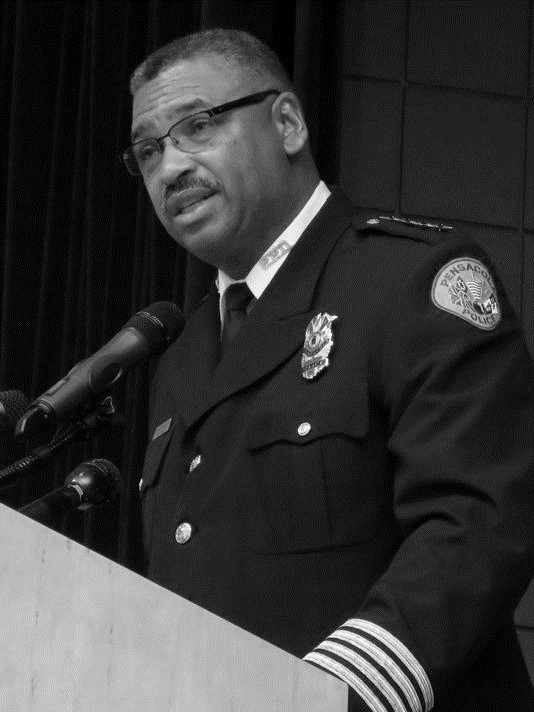
Born in Our Lady of Angels Clinic in Pensacola, David Alexander III was the oldest of five children. His hard-working parents, David Alexander Jr., a factory worker, and Annie M., a janitor, devoted themselves to teaching all five children good Christian values and instilled in them the meaning of hard work. David remembered these lessons and took them very seriously. David was the first in his family to earn a college degree. David’s career in public life began in Pensacola as a public safety cadet, working for the City of Pensacola Police Department. In David’s cadet interview he was asked “where do you see yourself in five years”? His answer was sergeant, lieutenant, or even captain. David was very ambitious and had aspirations of moving up the career ladder. Despite seeing few black men in the ranks of law enforcement, David joined the Pensacola Police Department. He earned the reputation of being an officer with integrity and was known by all for his fairness.
It was that type of character that helped him move through the ranks. During his 32 years of service, he served in every capacity of the police department. In 2017, David Alexander III made history in Pensacola, Florida when he was appointed the City of Pensacola’s first African American Police Chief.
As Chief of Police, David was praised for his Servant-Leadership and a significant reduction in crime. David led the department through the staffing crisis and despite the budget constraints he kept officers on the streets to be responsive to calls for services. Remarkably, through increased positive interactions with citizens and community policing, crime was reduced an additional 10.2 percent bringing the crime rate to the lowest it had been in 20 years.
Chief Alexander’s “Intentional Policing Strategies” were known for innovative programs like Kids and Cops and BLAST, mentoring programs that empowered at risk students through tutoring, community service, and other positive incentives. The Kids and Cops program introduced youth to civic engagement along with the importance of a quality education and rewarded them with a trip to the state capitol, a state university college visit, and an all-day experience at Tampa’s Bush Gardens. The BLAST program was a partnership with the Department of Justice to build lasting relationships between police and citizens. This program was initially launched at Camelot Academy, a school stigmatized for having students who had learning challenges to overcome. The program was not only successful, but it was part of the recognition given to the Pensacola Police Department in the 2016 International Association of Police Chiefs Conference in San Diego, California. This program was highlighted as a model strategy for 21st Century Community Policing. Chief Alexander launched a “little Free Library” project to reintroduce literacy in some of the area’s most crime ridden neighborhoods. Chief Alexander collaborated with faith leaders, city officials, elected officials, and citizens to improve the quality of life in neighborhoods distressed by violent crimes.
Other innovative ideas were implemented to enhance the efforts such as: Coffee with a Cop, Gifts and Toys at Christmas, Stop and Talk, Community United in Prayer events, town hall meetings, radio talk shows, Race and Reconciliation, Youth & Police Academy, Big Brothers Big Sisters’ Bigs and Badges, Florida Youth Challenge Academy, LETF grants to the public, and TV public safety campaign ads. Chief Alexander shepherded the pulling together of law enforcement and citizens to create a common ground to achieve what agencies and departments across the nation were struggling to achieve, good police-community relations and a safe haven for all of its citizens.
Chief Alexander III has received numerous awards and recognitions for his outstanding commitment to serving the community. David was honored by the Most Worshipful Grand Master Walter Gulley, of the Most Worshipful Union Grand Lodge of Florida-Belize, Central America Jurisdiction, for his overall professional law enforcement achievements. Chief Alexander was also the recipient of the Presidential Lifetime Achievement Award.
Chief Alexander retired in May of 2017, but remained involved in the community, collaborating with others to affect positive change and continue to make a difference in the lives of people.
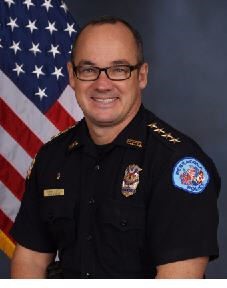
On Friday, May 12, 2017, David Alexander stepped down as chief and Assistant Chief Tommi Lyter assumed the position of chief. was born on March 16th, 1969 in Lewiston Pennsylvania, the son of a career Navy father. As a child, he lived in Virginia Beach, Maine, New Jersey, Atsugi Japan, and Pensacola, where he graduated high school. For most of his life, Chief Lyter desired to be a police officer. While still in high school, he made the commitment to pursue a career in law enforcement, enrolling in the Criminal Justice program at Pensacola State College after high school.
Chief Lyter was hired as a police officer on August 13, 1990. His favorite assignments were as a K-9 officer and serving on the SWAT teams, but the best job he ever held was that of a patrol sergeant. Tommi worked his way through the ranks, attaining the rank of Assistant Chief in 2015. Chief Lyter and his wife, Brenda are the parents of Christopher, Jonathan, and Brandon.
“I’ve worked with some of the greatest people to ever wear a police uniform and I’ve made some of the best friends I could ever ask for” was Tommi’s answer when asked what the best thing was about working at the Pensacola Police Department. The low points were witnessing severe injuries and death to children.
When asked about the changes in the police profession he had seen over his career, the chief answered “Computer technology has changed drastically over the years. It’s helped make our jobs easier and more efficient. I believe that our job is much harder today because of the added demands placed on officers and public scrutiny.”
On Friday, May 26, Tommi’s wife, Brenda, held the Bible while Tommi took the oath of office administered by Escambia County Judge Amy Brodersen at Olive Baptist Church.
 The Pensacola Police Historic Society